Year 2 English Sentence Work Printable primary worksheets

All of our Year 2 English Sentence Work resources come complete with answer sheets to save time for busy teachers and parents. Input your child’s scores and keep track of your child's progress.

worksheet plans from £3.20/month
Filters

44 results

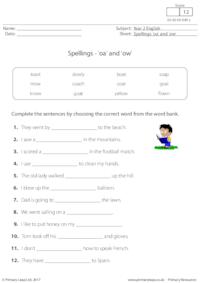
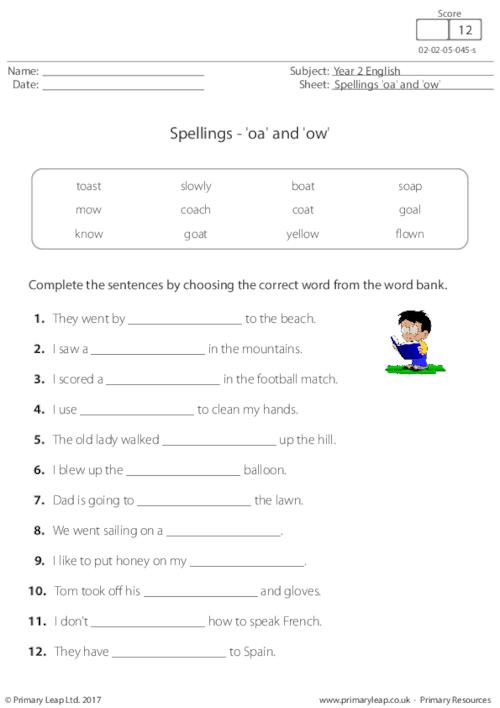
Spellings - 'oa' and 'ow'

Spellings - 'oa' and 'ow'

Students complete the sentences by choosing the correct word from the word bank.

Age: 6 - 7
1
2
3
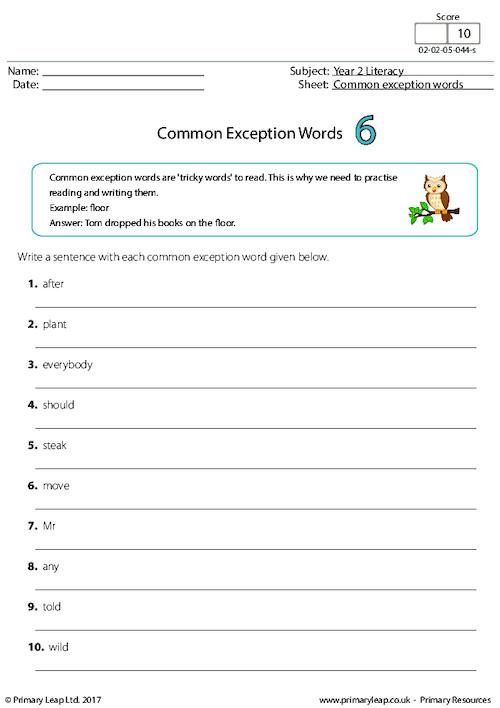
Common Exception Words 6

Common Exception Words 6

Common exception words are 'tricky words' to read. Some exception words are used very frequently, which is why children should start reading and writing them at an early age. This English resource helps students practise reading and writing common exception words. They are asked to read the word and use it in a sentence.

Age: 6 - 7
1
2
3
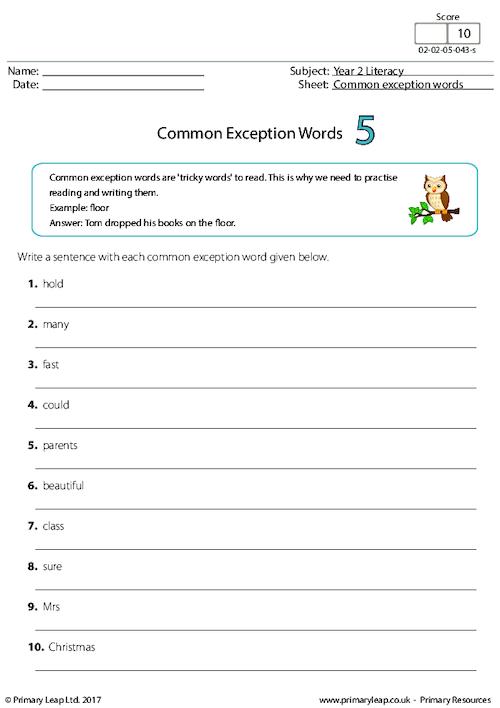
Common Exception Words 5

Common Exception Words 5

Common exception words are 'tricky words' to read. Some exception words are used very frequently, which is why children should start reading and writing them at an early age. This English resource helps students practise reading and writing common exception words. They are asked to read the word and use it in a sentence.

Age: 6 - 7
1
2
3
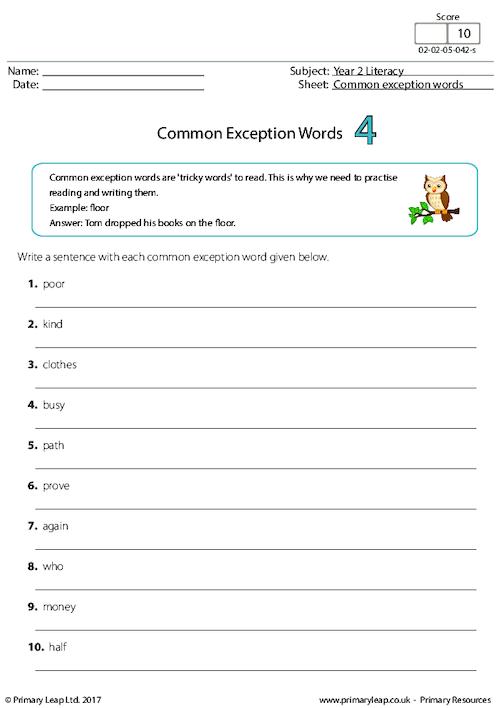
Common Exception Words 4

Common Exception Words 4

Common exception words are 'tricky words' to read. Some exception words are used very frequently, which is why children should start reading and writing them at an early age. This English resource helps students practise reading and writing common exception words. They are asked to read the word and use it in a sentence.

Age: 6 - 7
1
2
3
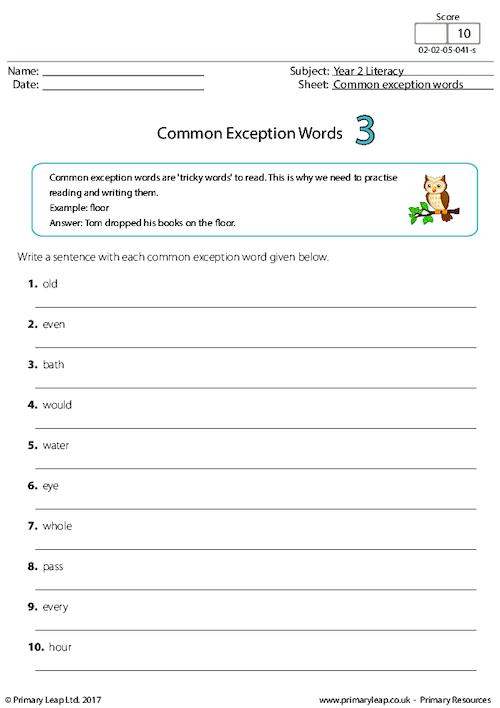
Common Exception Words 3

Common Exception Words 3

Common exception words are 'tricky words' to read. Some exception words are used very frequently, which is why children should start reading and writing them at an early age. This English resource helps students practise reading and writing common exception words. They are asked to read the word and use it in a sentence.

Age: 6 - 7
1
2
3
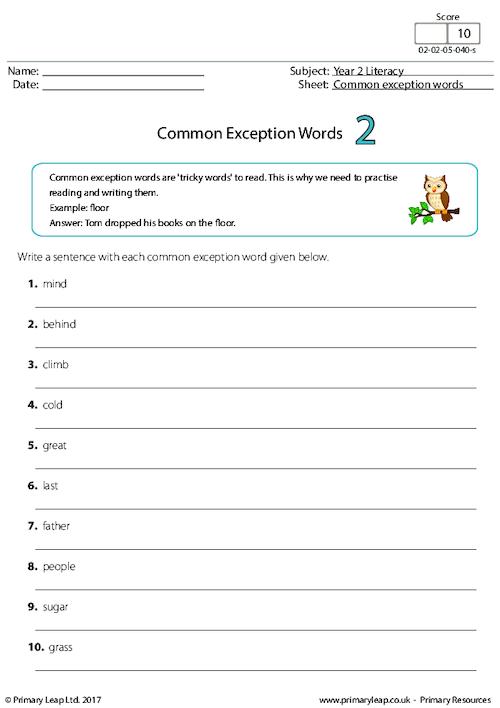
Common Exception Words 2

Common Exception Words 2

Common exception words are 'tricky words' to read. Some exception words are used very frequently, which is why children should start reading and writing them at an early age. This English resource helps students practise reading and writing common exception words. They are asked to read the word and use it in a sentence.

Age: 6 - 7
1
2
3
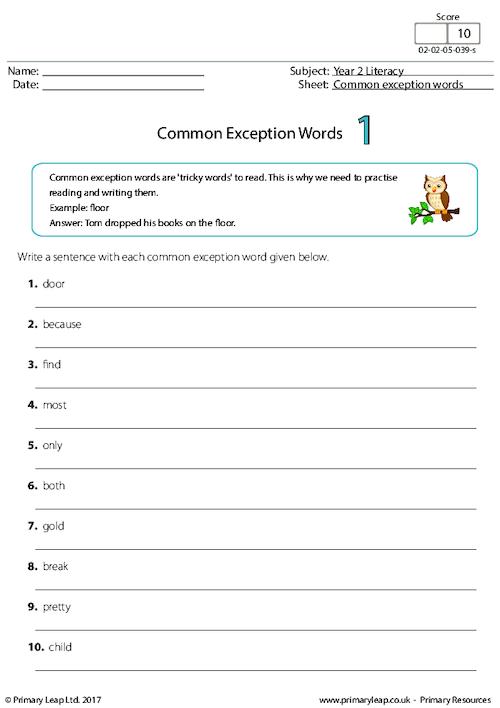
Common Exception Words 1

Common Exception Words 1

Common exception words are 'tricky words' to read. Some exception words are used very frequently, which is why children should start reading and writing them at an early age. This English resource helps students practise reading and writing common exception words. They are asked to read the word and use it in a sentence.

Age: 6 - 7
1
2
3
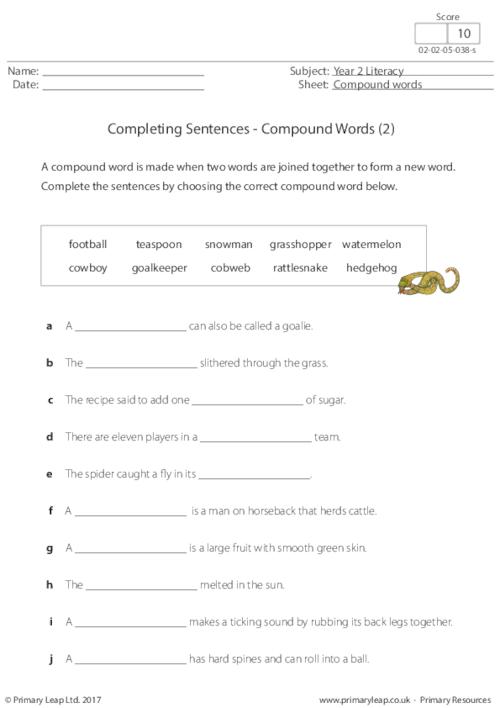
Completing Sentences - Compound Words 2

Completing Sentences - Compound Words 2

Year 2 English - Compound words worksheet. Compound words are made when two words are joined together to make a new word. Students choose the correct compound word to complete the sentences.

Age: 6 - 7
1
2
3
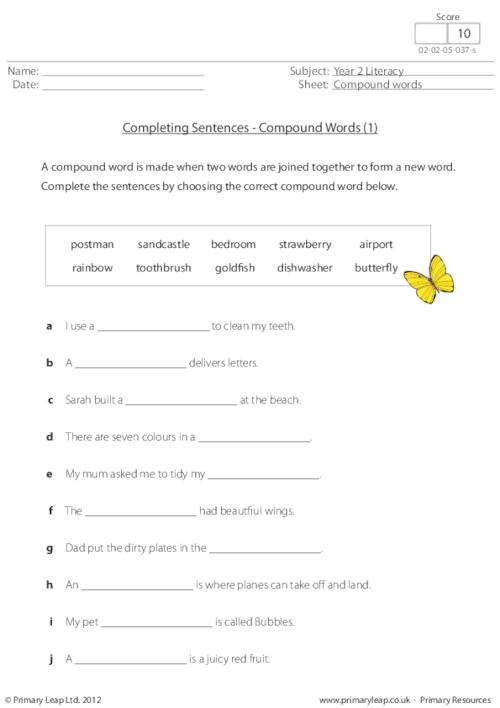
Completing Sentences - Compound Words 1

Completing Sentences - Compound Words 1

Year 2 English - Compound words worksheet. Compound words are made when two words are joined together to make a new word. Students choose the correct compound word to complete the sentences.

Age: 6 - 7
1
2
3
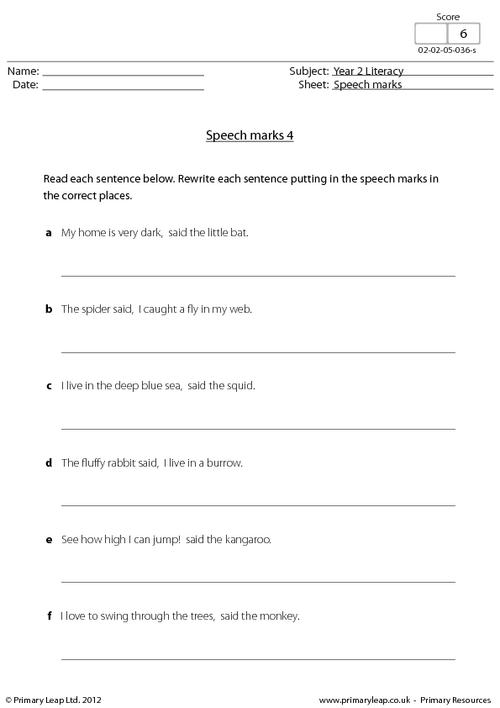
Speech marks 4

Speech marks 4

Year 2 English - Speech marks worksheet. Quotation marks are used to surround a quotation or direct speech. Students rewrite the sentences and add the missing speech marks.

Age: 6 - 7
1
2
3
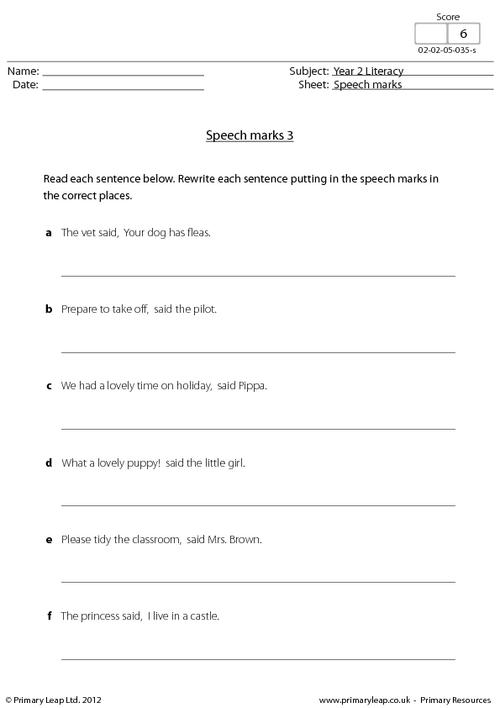
Speech marks 3

Speech marks 3

Year 2 English - Speech marks worksheet. Quotation marks are used to surround a quotation or direct speech. Students rewrite the sentences and add the missing speech marks.

Age: 6 - 7
1
2
3
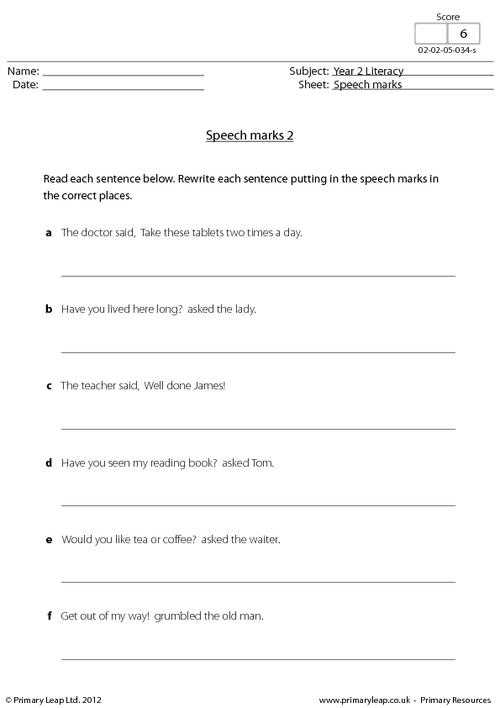
Speech marks 2

Speech marks 2

Year 2 English - Speech marks worksheet. Quotation marks are used to surround a quotation or direct speech. Students rewrite the sentences and add the missing speech marks.

Age: 6 - 7
1
2
3
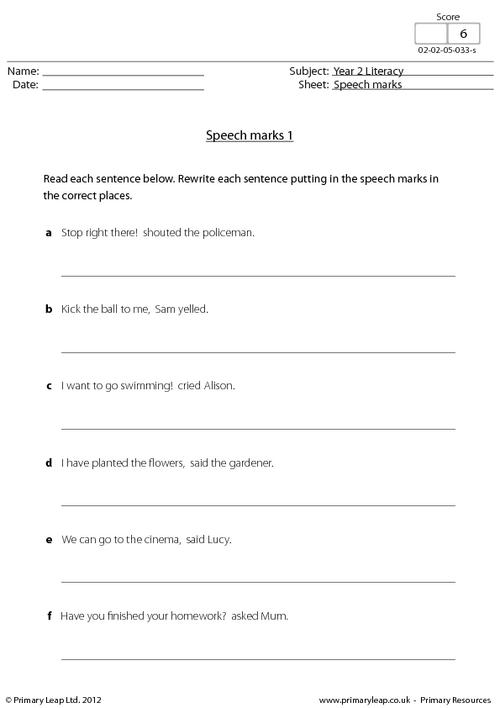
Speech marks 1

Speech marks 1

Year 2 English - Speech marks worksheet. Quotation marks are used to surround a quotation or direct speech. Students rewrite the sentences and add the missing speech marks.

Age: 6 - 7
1
2
3
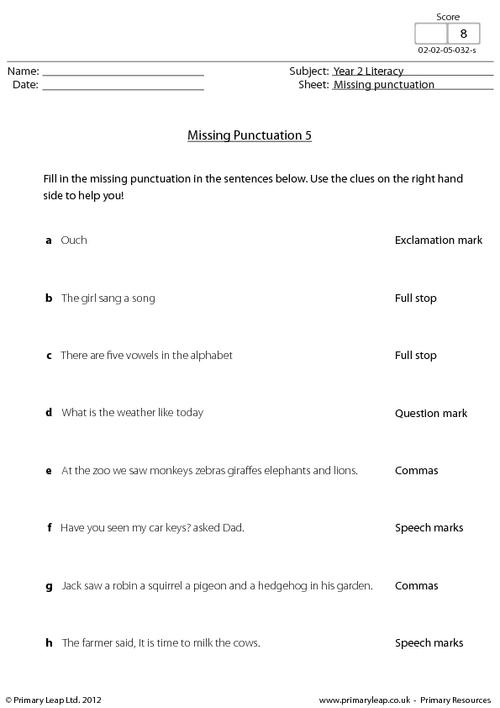
Missing punctuation 5

Missing punctuation 5

Year 2 English - Missing punctuation worksheet. Students fill in the missing punctuation in these sentences. Use the clues to help you!

Age: 6 - 7
1
2
3
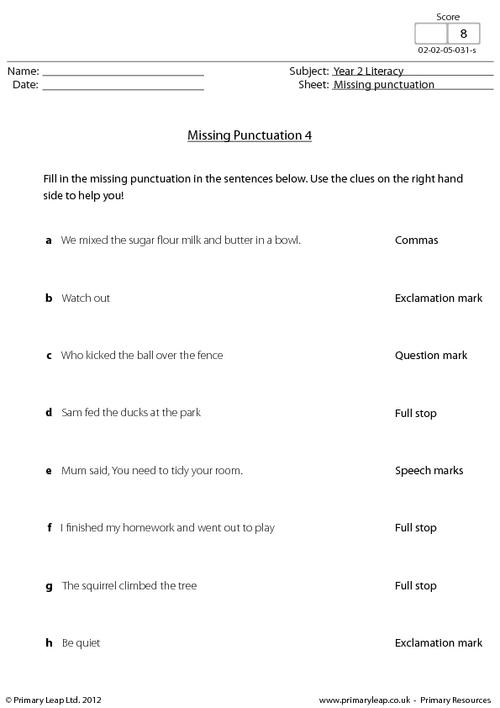
Missing punctuation (4)

Missing punctuation (4)

Year 2 English - Missing punctuation worksheet. Students fill in the missing punctuation in these sentences. Use the clues to help you!

Age: 6 - 7
1
2
3
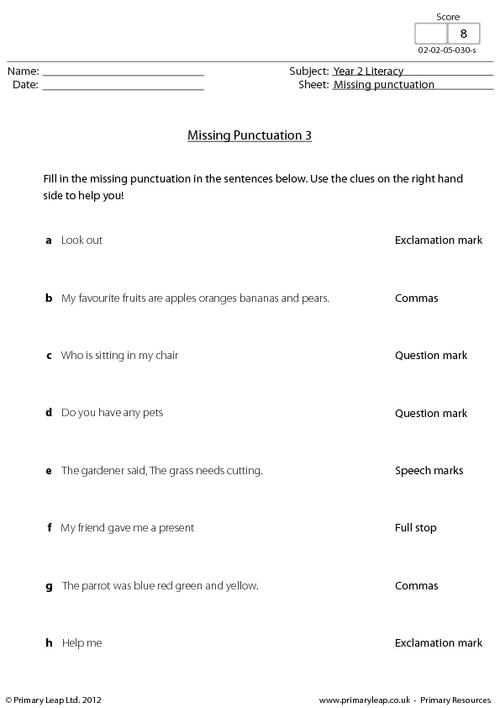
Missing punctuation (3)

Missing punctuation (3)

Year 2 English - Missing punctuation worksheet. Students fill in the missing punctuation in these sentences. Use the clues to help you!

Age: 6 - 7
1
2
3
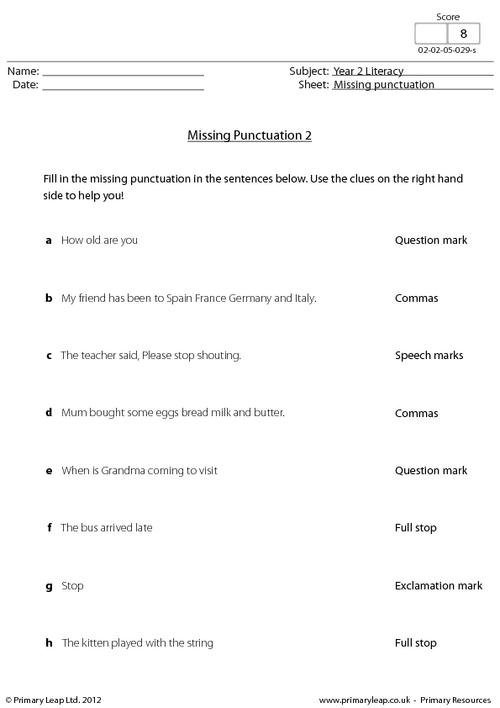
Missing punctuation (2)

Missing punctuation (2)

Year 2 English - Missing punctuation worksheet. Students fill in the missing punctuation in these sentences. Use the clues to help you!

Age: 6 - 7
1
2
3
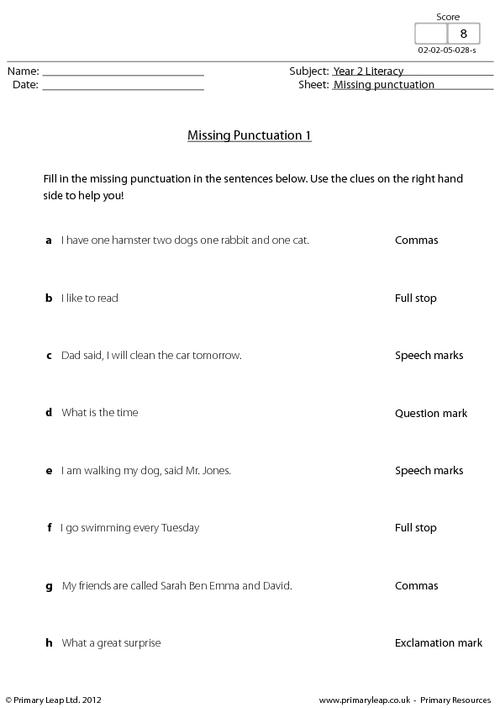
Missing punctuation (1)

Missing punctuation (1)

Year 2 English - Missing punctuation worksheet. Students fill in the missing punctuation in these sentences. Use the clues to help you!

Age: 6 - 7
1
2
3
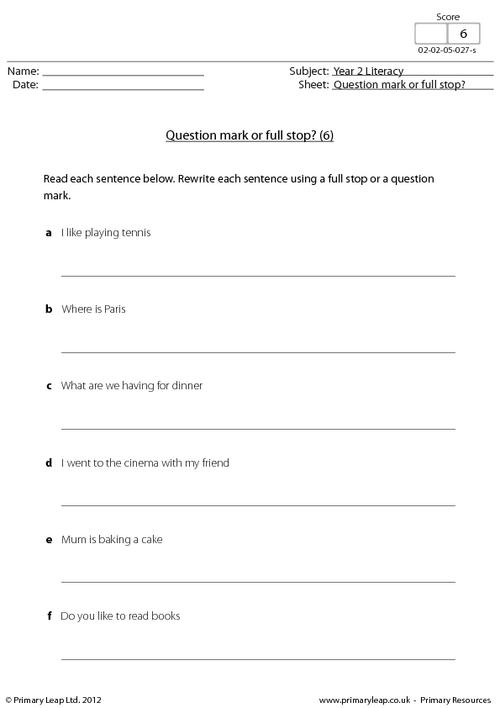
Question mark or full stop 6

Question mark or full stop 6

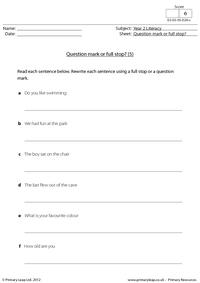
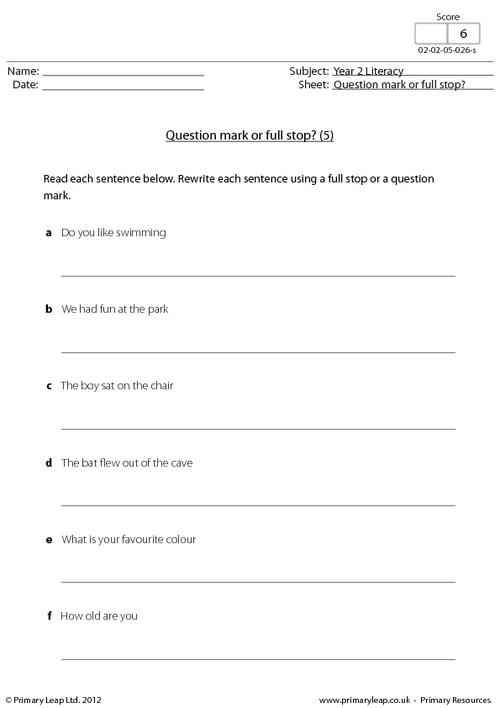
Year 2 English - Sentence work. Students read the sentences and rewrite them using a question mark or full stop.

Age: 6 - 7
1
2
3
Question mark or full stop 5

Question mark or full stop 5

Year 2 English - Sentence work. Students read the sentences and rewrite them using a question mark or full stop.

Age: 6 - 7
1
2
3
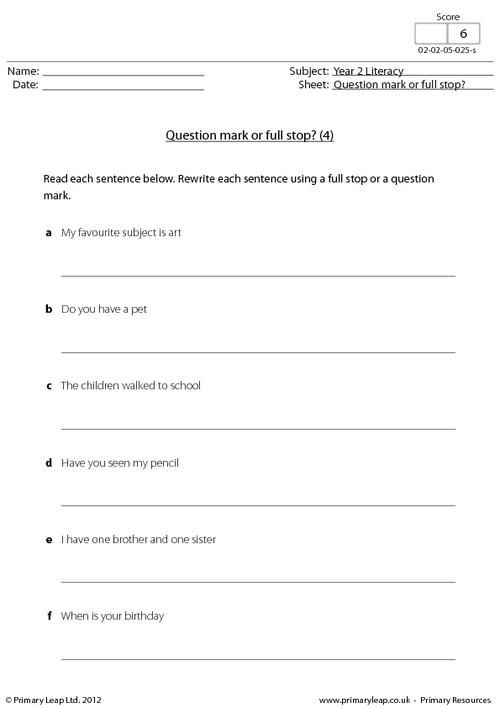
Question mark or full stop 4

Question mark or full stop 4

Year 2 English - Sentence work. Students read the sentences and rewrite them using a question mark or full stop.

Age: 6 - 7
1
2
3
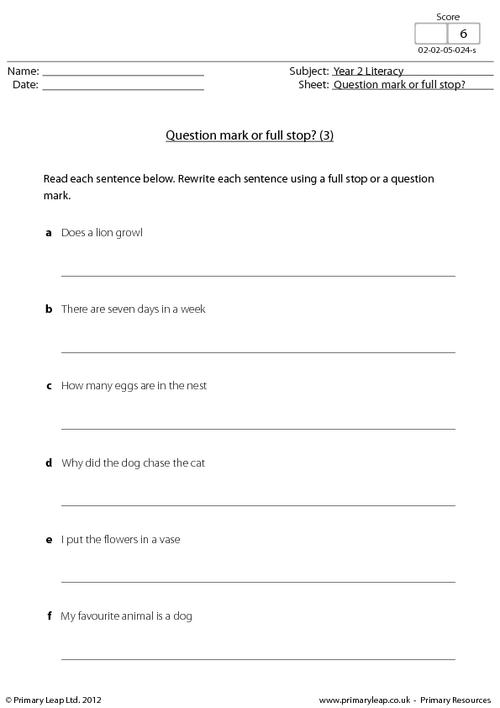
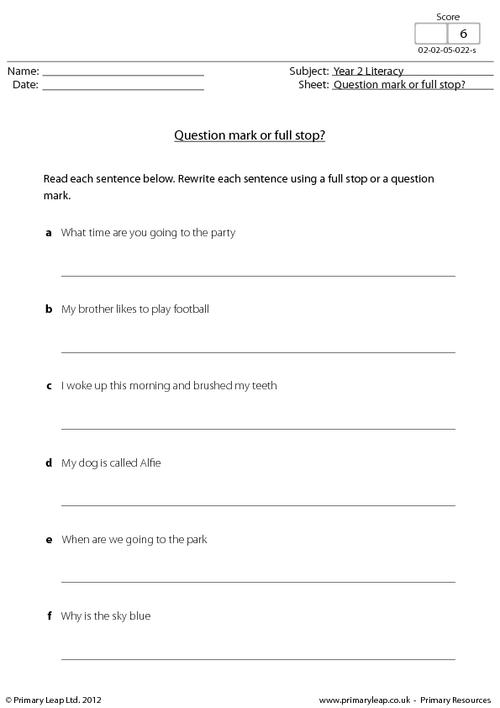
Question mark or full stop 3

Question mark or full stop 3

Year 2 English - Sentence work. Students read the sentences and rewrite them using a question mark or full stop.

Age: 6 - 7
1
2
3
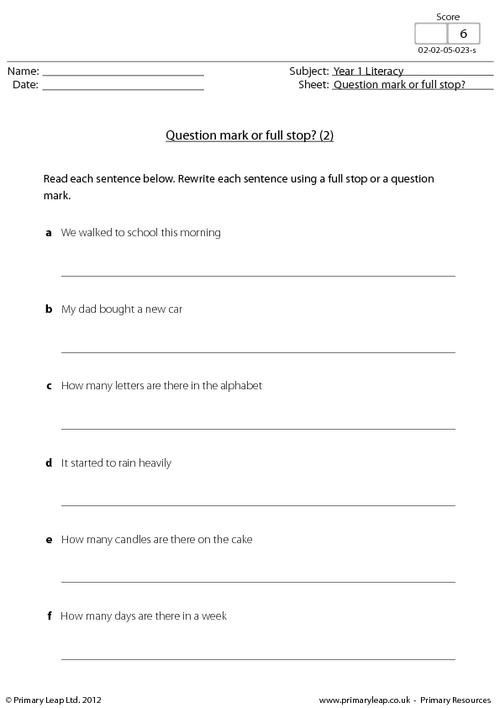
Question mark or full stop 2

Question mark or full stop 2

Year 2 English - Sentence work. Students read the sentences and rewrite them using a question mark or full stop.

Age: 6 - 7
1
2
3
Question mark or full stop 1

Question mark or full stop 1

Year 2 English - Sentence work. Students read the sentences and rewrite them using a question mark or full stop.

Age: 6 - 7
1
2
3
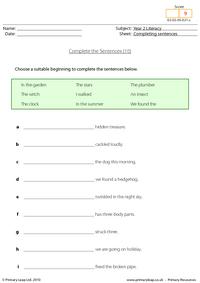
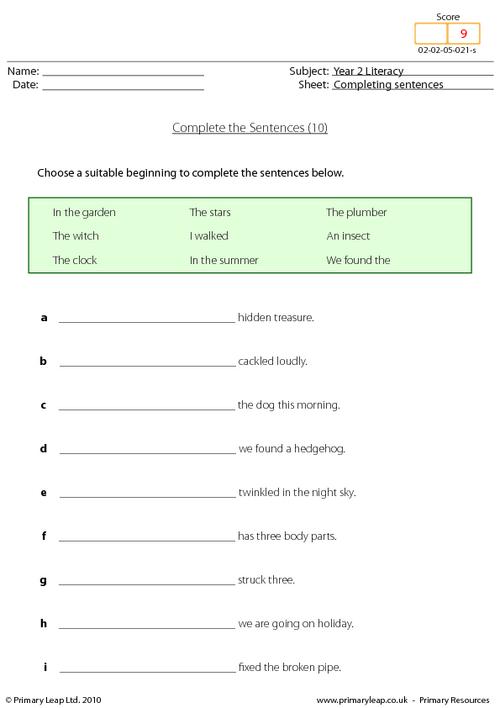
Completing sentences (10)

Completing sentences (10)

Year 2 English - Sentence work. Sentence completion helps to improve a child's skills in logic. Students look at the sentences and choose a suitable beginning to complete each sentence.

Age: 6 - 7
1
2
3
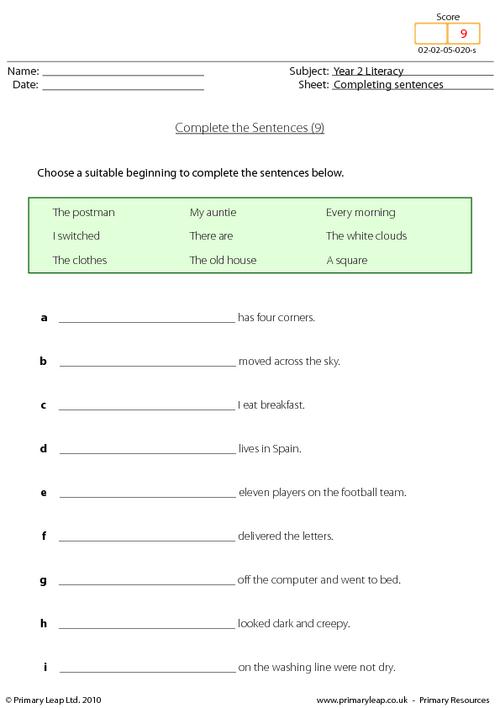
Completing sentences (9)

Completing sentences (9)

Year 2 English - Sentence work. Sentence completion helps to improve a child's skills in logic. Students look at the sentences and choose a suitable beginning to complete each sentence.

Age: 6 - 7
1
2
3
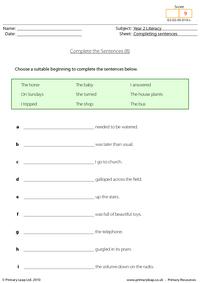
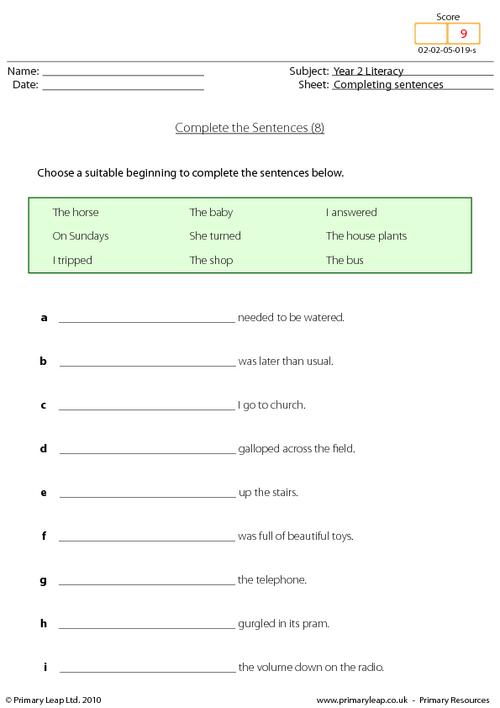
Completing sentences (8)

Completing sentences (8)

Year 2 English - Sentence work. Sentence completion helps to improve a child's skills in logic. Students look at the sentences and choose a suitable beginning to complete each sentence.

Age: 6 - 7
1
2
3
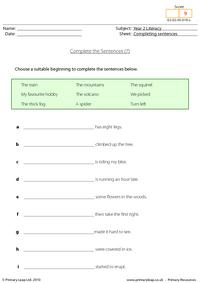
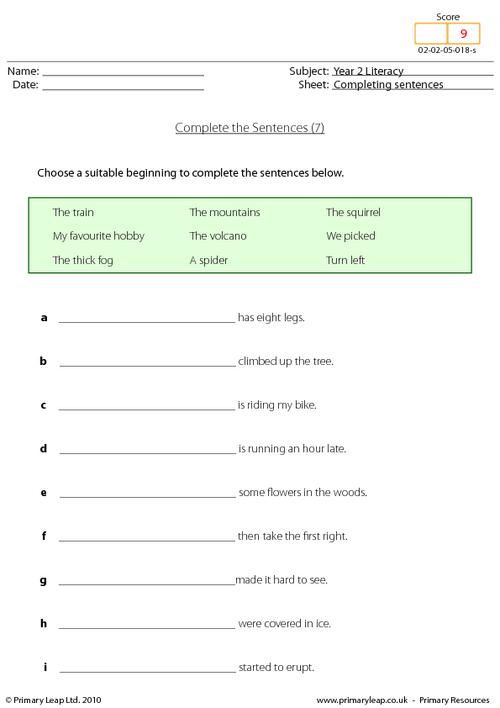
Completing sentences (7)

Completing sentences (7)

Year 2 English - Sentence work. Sentence completion helps to improve a child's skills in logic. Students look at the sentences and choose a suitable beginning to complete each sentence.

Age: 6 - 7
1
2
3
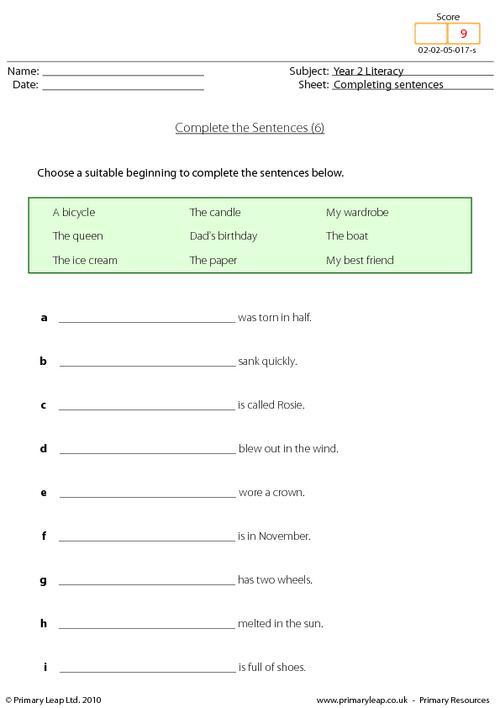
Completing sentences (6)

Completing sentences (6)

Year 2 English - Sentence work. Sentence completion helps to improve a child's skills in logic. Students look at the sentences and choose a suitable beginning to complete each sentence.

Age: 6 - 7
1
2
3
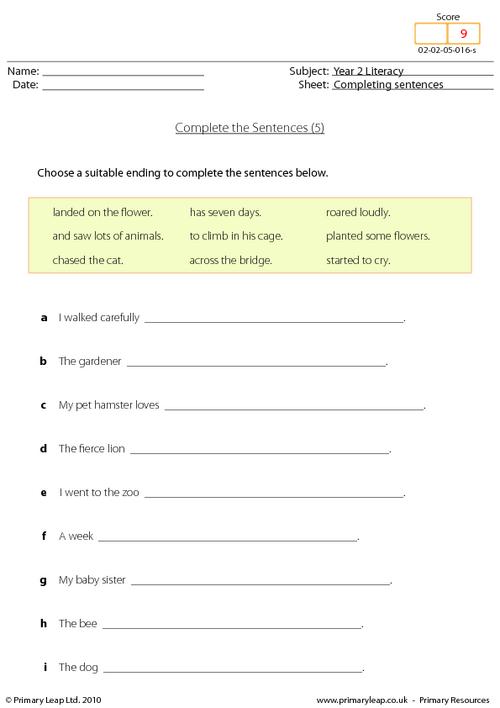
Completing sentences (5)

Completing sentences (5)

Year 2 English - Sentence work. Sentence completion helps to improve a child's skills in logic. Students look at the sentences and choose a suitable ending to complete each sentence.

Age: 6 - 7
1
2
3
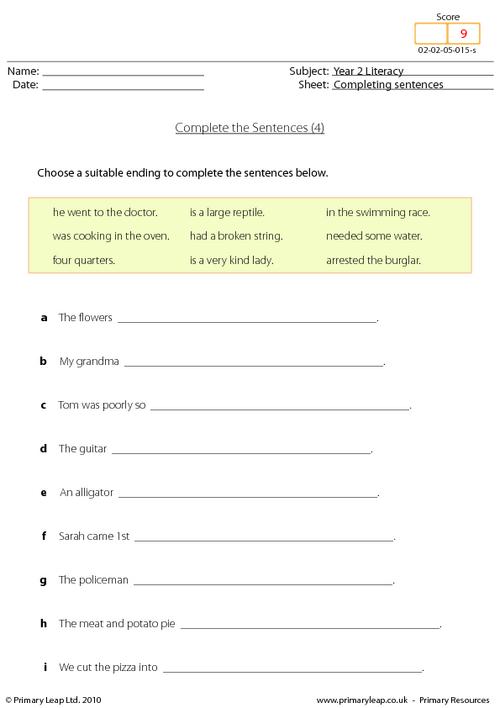
Completing sentences (4)

Completing sentences (4)

Year 2 English - Sentence work. Sentence completion helps to improve a child's skills in logic. Students look at the sentences and choose a suitable ending to complete each sentence.

Age: 6 - 7
1
2
3
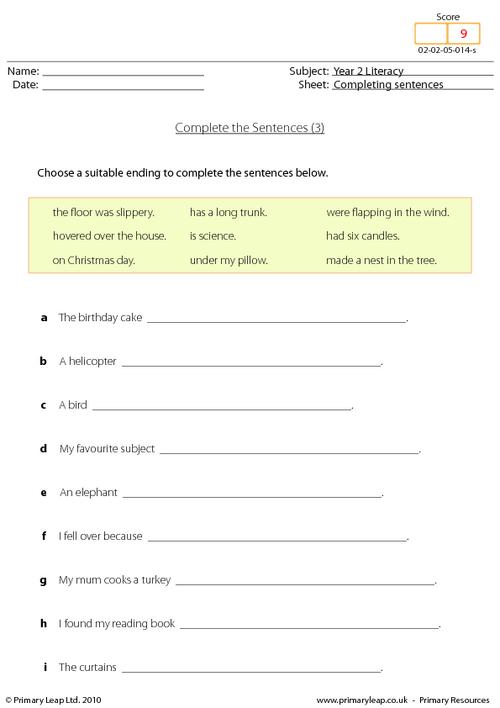
Completing sentences (3)

Completing sentences (3)

Year 2 English - Sentence work. Sentence completion helps to improve a child's skills in logic. Students look at the sentences and choose a suitable ending to complete each sentence.

Age: 6 - 7
1
2
3
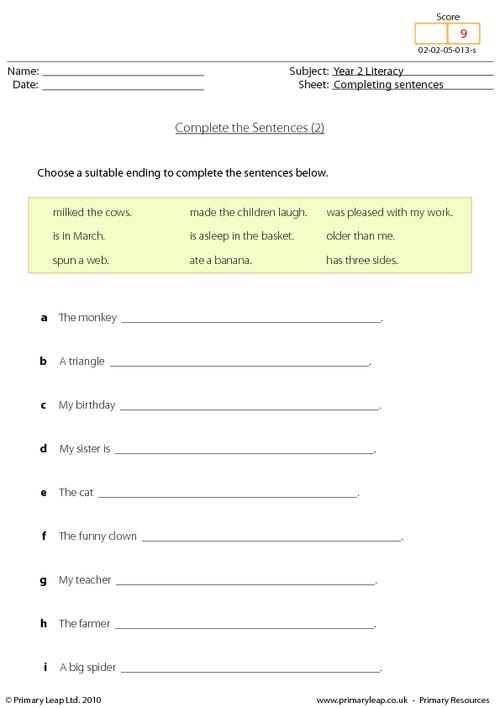
Completing sentences (2)

Completing sentences (2)

Year 2 English - Sentence work. Sentence completion helps to improve a child's skills in logic. Students look at the sentences and choose a suitable ending to complete each sentence.

Age: 6 - 7
1
2
3
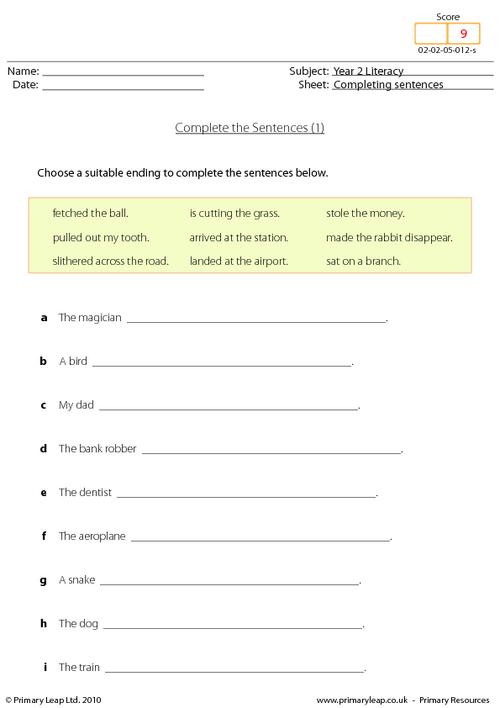
Completing sentences (1)

Completing sentences (1)

Year 2 English - Sentence work. Sentence completion helps to improve a child's skills in logic. Students look at the sentences and choose a suitable ending to complete each sentence.

Age: 6 - 7
1
2
3
Conjunctions 3

Conjunctions 3

Year 2 English - Conjunctions worksheet. A conjunction is a word that is used to join two sentences together. Students use the word 'and' to join the sentences together.

Age: 6 - 7
1
2
3
Capital letters

Capital letters

Year 2 English - Capital letters worksheet. Students firstly circle all of the words that should have a capital letter. They then write them on the lines provided.

Age: 6 - 7
1
2
3
Capital letters and full stops

Capital letters and full stops

Year 2 English - Capital letters and full stops worksheet. This activity asks students to write the sentences using a capital letter and full stop.

Age: 6 - 7
1
2
3
Correct order

Correct order

Year 2 English - Correct order worksheet. Students write the sentences in the correct order. Don't forget to use capital letters and full stops.

Age: 6 - 7
1
2
3
Conjunctions 2

Conjunctions 2

Year 2 English - Conjunctions worksheet. A conjunction is a word that is used to join two sentences together. Students use the correct conjunction in brackets to complete the sentences.

Age: 6 - 7
1
2
3
Commas

Commas

Year 2 English - Commas worksheet. This activity shows students how to use commas when making a list of things.

Age: 6 - 7
1
2
3
Conjunctions

Conjunctions

Year 2 English - Conjunctions worksheet. A conjunction is a word that is used to join two sentences together. Students use the word 'and' to join the sentences together.

Age: 6 - 7
1
2
3
Speech marks 2

Speech marks 2

Year 2 English - Speech marks worksheet. Quotation marks are used to surround a quotation or direct speech. Students add the quotation marks to the sentences.

Age: 6 - 7
1
2
3
Speech marks 1

Speech marks 1

Year 2 English - Speech marks worksheet. Quotation marks are used to surround a quotation or direct speech. Students add the quotation marks to the sentences.

Age: 6 - 7
1
2
3
Full stops and question marks

Full stops and question marks

Year 2 English - Full stops and question marks worksheet. Students read the sentences and rewrite them correctly using a full stop or question mark.

Age: 6 - 7
1
2
3
of 1

Year 2 English Sentence Work Worksheets - Created by teachers and loved by kids

Check out our ready-to-use Year 2 English Sentence Work worksheets that can be used in the classroom or at home. Simply download or print and watch your child’s confidence grow with our easy to follow Year 2 English Sentence Work printables.
Learn

One of the best things about printable worksheets is that they make learning fun and easy. Explore our educational resources based on Year 2 English Sentence Work and keep your children learning through these fun and engaging exercises.

Progress

Our Year 2 English Sentence Work printable worksheets are designed for progressive learning. Our engaging content enables a child to learn at their own speed and gain confidence quickly. When we help a child believe in themselves, we empower them for life.

Improve

Printable worksheets are a great way to enhance creativity and improve a child’s knowledge. Help your child learn more about Year 2 English Sentence Work with this great selection of worksheets designed to help children succeed.

We use cookies to improve your experience on our site and to show you personalized advertising.

To find out more, read our privacy policy and cookie policy.

Okay! No, thanks.